Saturday, 20 July 2013

Matki chi Usal -Another Pune delicacy


Matki or Moth bean was introduced to me once I started living in Pune. Matki's Usal and Misal are signature  dishes innate to the Maharashtrian cuisine. Usal is actually a name given to a vegetable dish made with variety of grains sprouted (it could be green gram, chick pea, black eyed pea and matki). Matki Chi Usal is a very common dish served with Chapathi (pholi) and my daughters love it being introduced in their day care. Matki is also very rich in protein, and when sprouted, it is very nutritious excellent for growing kids and diabetics and heart patients.


In Pune, you will find sprouted Matki sold in a grocery store but have to pay premium price vs. buying dry beans and sprouting it yourself. The sprouting process is an art in itself and so thought I will share some nuances on that as well.


Matki Chi Usal

 Ingredients
Matki (Moth bean) - 500 g
Finely chopped Onion - 1
Finely chopped Tomatoes - 2
Cilantro - 1 bunch finely cut
Mustard seeds - 1 tsp
Refined oil - 3 Tbsp
Red chilli powser - 1 Tbsp (or more)
Salt to taste
Sprouting the Matki
Matki is soaked overnight in water (12 hours) and next day when the seeds are almost ready to germinate, you wrap it up in wet cloth (muslin cotton) that has some holes to breath. You soak the cloth wet and keep it aside for an entire day (24 hours). The seeds will germinate and become sprouts. You could leave another 12 hours to get the sprouts to become longer. Otherwise, you can use them in the dish immediately. If I soak the Matki on Day 1 night, I can use it on Day 3 morning.

Cooking the Usal
Heat oil in pan, add the mustard seeds, once they pop, add the onions and saute until brown. Add the tomatoes, salt and red chilli powder and let it cook until soft. Add the sprouted Matki and saute the entire mix for 5 min until Matki is shallow fried and half cooked. Then add water and let it cook for 10 min or until the dish is dry (no water). Garnish with cilantro leaves on top and serve with hot chapathis.


Friday, 19 July 2013

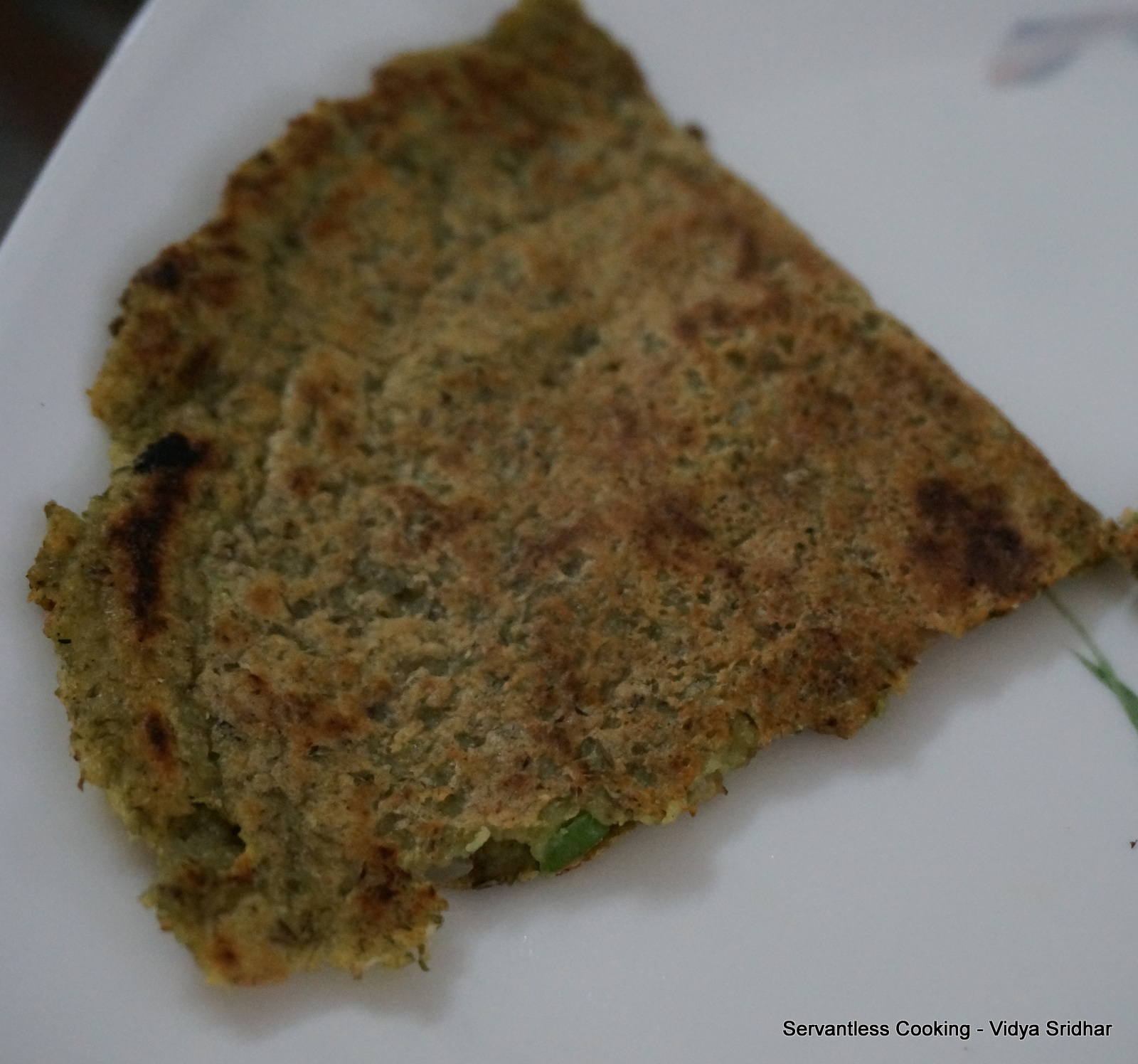
Pesarattu (Whole green gram dosa) - An Andhra delicacy


Whole grains, especially green gram is very nutritious and easy to digest. It is recommended for many diabetics for its fibre and nutrition. Today I am going to give you the recipe for a "dosa" or "crepe" made with whole green gram, soaked and grinded to a coarse batter. It is very simple to make and very nutritious.

This is one of the signature dishes from Andhra Pradesh where I grew up. The other components used are ginger, onion and green chillies that add the unique taste to the dish.

Pesarattu - Whole green gram dosa
Ingredients
Whole green gram (Akha Moong)
Onions
Green chilli
Ginger
Salt to taste

Directions
Soak the green gram overnight. Next day, decant and grind it using a blender into a coarse batter. The outer shell of the green gram brings the coarseness to the batter. You can grind some ginger, chilli and salt in this batter or leave it for later to add from top.

Finely chop the onions, ginger and green chilli and keep it aside for the stuffing of the dosa.

Making the Pesarattu (dosa)
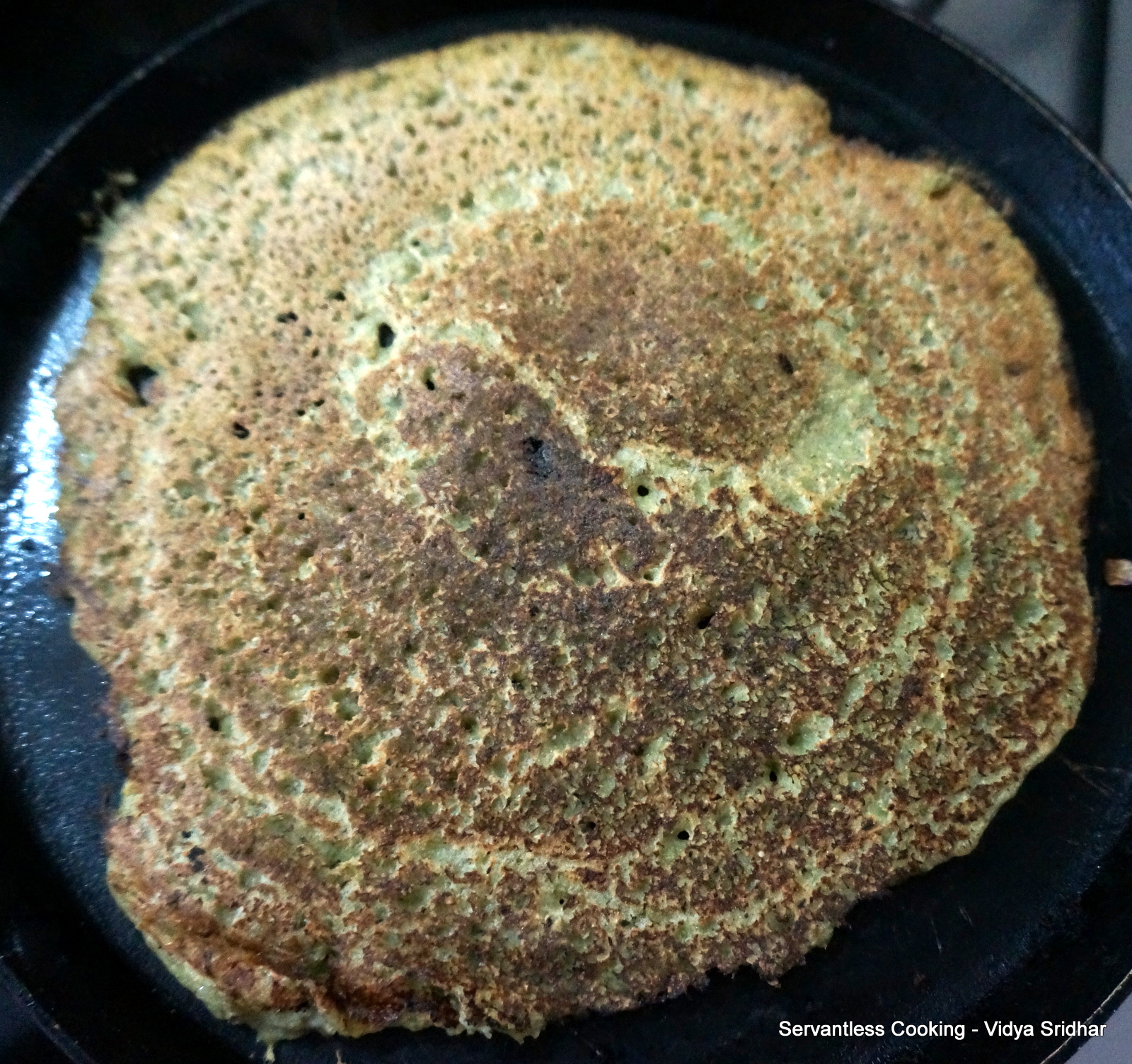
Take a ladle and spread the batter smoothly on the flat pan into a circle. You could either take just enough batter to spread it thin OR shave the extra batter off the pan by the spatula (as shown in the picture).

If the layer is thick, you need to cook the dosa on both sides. If it is spread thin, you could cook only on one side. Even if you flip the dosa, the other side should only be half cooked.

Spread the onions, chilli and ginger mix on the half cooked side of the dosa and make a sandwich by placing the other side on top. Squeeze the spatula on top of the dosa so the layers join together and make a good sandwich. If the batter is completely cooked, the sandwich will not stick together and cook and the onions will come out. Roast both sides well and serve with hot chutney or gun powder or dosa molagapodi :-) 


Gun powder (Spicy dosa powder)
Ingredients
Black gram dal (urad dal) - 1 cup
Yellow split pea (chana dal) - 1 cup
Sesame seeds - 1/4 cup
Red chillies - 10-12
Salt to taste

Dry roast above ingredients and grind into fine powder. To serve with oil with snacks such as dosa and idli.


Friday, 12 July 2013

Poosanikai mor kuzhambu (Ash gourd buttermilk curry)

Poosanikai (Ash Gourd) mor (buttermilk) kuzhambu (curry/sambhar) is a signature Iyengar entree that is must have in festivals, weddings and other important gatherings.  The typical recipe that my mom in law uses is one that has coconut, cumin and green chillies as spices, but I thought of giving it a typical "Sambhar" taste with added Rasam spicy mix - Iyer style.

Today you will learn my recipe using the Spicy Rasam mix.

Poosanikai mor kuzhambu
Ingredients
Ash gourd - 1 kg (chopped into big pieces)
Tamarind paste - 1 tbsp
Rasam powder - 2 tbsp
Water - 2 cups
Coconut (grated) - 1/2 cup
Green chillies - 1-2
Yogurt (nicely mixed) or buttermilk (thick) - 2 cups
Salt to taste
Refined oil - 1 tbsp
1 tsp mustard seeds
1 tsp asafoetida
few curry leaves

Rasam Powder (you can store this as spice mix)
2 tbsp coriander seeds
3-4 Red Chilli 
1/2 tbsp cumin
1/2 tbsp black pepper corn seeds
1 tsp fenugreek
1 tsp asafoetida
Dry fry the above ingredients and grind them into powder.

Directions for Kozhumbu
Cook the ash gourd in 2 cups of water along with tamarind paste and salt. Add Rasam powder and 1 cup of buttermilk/yogurt, so the vegetable cooks in the juice of buttermilk, tamarind and salt/spices.
Meanwhile, grind the coconut (you can use fresh coconut as well) and green chilli and add to this mix and let it cook for 5-10 min. The curry will be slightly watery. You lower the heat and add the 1 cup of remaining yogurt in the end and let it simmer for 2-3 min. In another pan, heat some oil, add the mustard seeds and when they sputter, add the asafoetida, red chilli and curry leaves and switch off the heat. Add this spicy mix on top of the kozhumbu (dish) to flavor it on top.

Serve hot with Rice or with Rice+cooked Toor dal (red lentil). Eating with lentil is typical from my husband's family. My mom in law usually cooks this dish with only green chilli and coconut/cumin as spice. However, my husband liked this new taste that is a fusion of Sambhar and Mor kozhumbu.


Wednesday, 10 July 2013

Verkadalai, Shengdana aka Peanut chutney (dry)

I have used peanuts in many different ways in my cooking. Peanuts play an important role as an ingredient in South Indian cooking, especially cuisines from Andhra Pradesh and Maharashtra. After living in cities like Hyderabad and Pune, I have started to see how people use it in their cooking.


In Andhra, the "Gutti Vankai Koora" - Stuffed brinjal; or Bagara Baigan (Brinjal curry) (http://servantlesscooking.blogspot.in/2013/07/bagara-baingan-eggplant-dish-hyderabadi.html) is very similar to "Bharlele Karle" - Stuffed bitter gourd (http://servantlesscooking.blogspot.in/2013/06/bharlele-karle-stuffed-karela-bitter.html) in that all these recipes use peanuts as base ingredient. In Tamil Nadu, I have seen peanuts being used to make spicy powder that is used to eat with rice or as base ingredient to make wet chutneys that can be eaten with Idlis, Dosas (breakfast items). I discovered another new use for peanuts from my colleague, Vivek Bibave who started bringing this simple dry chutney from home made of peanuts that was so very tasty.

So, wanted to share with you two unique or different ways of making Spicy Peanut Chutney (dry)

Shengdana Chutney (Sukha)
Courtesy: Vivek Bibave's mom

1 cup Peanuts
4 Green /Red Chilli
Salt to taste

1 clove Garlic (optional)
1 Tbsp refined oil


If you have mortar and pestle at home, grind the raw peanuts, chilli, salt and garlic together to make a coarse ground powder/paste. The oil from the peanut and the water from the chilli will make it a little sticky. Heat oil in pan, and saute this paste/powder until it is no more sticky (2-5 min). The Sukha (dry) Chutney is ready to serve with hot Chapathi/Roti, or Rice.


Verkadalai Podi (Peanut powder)
Courtesy: Dakshin - Chandra Padmanabhan

1 cup peanut
1/4 cup sesame seeds
7 red chilli
1/2 tsp asafoetida
salt to taste

Dry fry the peanuts, sesame seeds, chilli and asafoetida. Grind it well in a powder. Ready to use with Rice or Dosa/Idli.

Peanut Powder Rice
2-3 Tbsp Peanut powder (as above)
1 Tbsp oil
1 cup cooked rice
1/2 tsp mustard
1/2 tsp black gram
1/2 tsp chana dal (yellow split pea)
1 red chilli
few curry leaves


Heat the oil, add the mustard seeds, dals and when the mustard sputters, add the red chilli and curry leaves. Add the rice salt and peanut powder and mix well. Serve hot.

The Shengdana chutney is very common in Maharashtrian cooking, and raw chilli/garlic along with peanuts brings a unique taste to the recipe. You can make this without garlic and it tastes good too. A little bit more salt than usual is typical to this recipe as it is supposed to be eaten as a chutney as is or with yogurt mixed in it with chapathi.

Health tip: Peanut is the protein bank for vegetarians, a poor man's food and an excellent meat substitute for protein. It also provides necessary fat (unsaturated) to your diet.
Eating raw or less processed garlic is a very good for heart as the functional components within it are heat labile and when we fry/saute the garlic to get the flavor, we actually kill the healthy contributors.


Tuesday, 9 July 2013

Bagara Baingan (Indian eggplant curry)- Hyderabad delicacy


Bagara Baingan is a famous recipe from Hyderabad, where I grew up. It is very popular in weddings served with Hyderabadi Biryani (the eggplants used to float in oil/masala). My mom popularized it amongst our family and it became my signature dish in the US in parties and family gatherings. Recently on a Sunday, my brother (who lives in US) told me that good old Bagara Baingan is for lunch! Found out that Jayashree, my sis-in-law made it (not my mom who is visiting them). So, it truly has become our signature household recipe passing along to next generations. 

The main ingredient in this dish is peanut and small purple baingan (brinjal/small purple, Indian eggplant). Otherwise, it is a mishmash of spices (you name it and it is there in this recipe). The recipe is quite elaborate, but I will try to keep it simple:) I also tried to make it more heart healthy with less oil and more protein (peanuts/dals). You can use Microwave to cook the eggplant and fry them in less oil (similar to what you take for a saute) instead of deep frying them.

Bagara Baingan
Dedicated to my mom, Lakshmi Raman, who taught me how to cook it

Ingredients
1 kg small purple Baingan (Indian eggplant).
6-8 Tbsp refined oil

Preparing the Baingan (Indian eggplant)
Try to pick the smaller eggplants with green stalks (greener the stalks, the fresher the eggplant is). Eggplant is washed and dried with cloth. With a knife, you slit the bottom of the eggplant into 4 quadrants ending the cut at the stalk. You don't cut it completely, you leave it as a whole. Heat oil with 4-6 tbsp of oil and fry the eggplant in oil until completely cooked (crinkled/brown), strain the oil and keep them aside on plate.

Wet Masala
3-4 medium size tomatoes
2 onions coarsely cut
2-3 cloves garlic
2-3 green chillies
1/8 cup grated coconut (you can use fresh coconut)
2 Tbsp Tamarind paste (concentrate)


Grind the tomatoes, onion, garlic, chillies and coconut in a blender until a smooth paste.

3 cups water for cooking dish
1 small bunch of cilantro leaves for garnish
Keep the water for later when you cook the masala.

Dry Masala
1 cup peanuts - roasted
1/4 cup chana dal (yellow split pea)
1/4 cup urad dal (black gram)
1/4 cup coriander seeds
1 tsp asafoetida
1 tsp turmeric
1 tsp cumin
1 tsp fenugreek
1 tsp mustard seeds
3-4 cloves
1 small cinnamon stick
2 cardamom clusters (8 small seeds)


1 tbsp poppy seeds
2 tbsp sesame seeds
3-4 red chilli

Directions
Heat 1 tsp oil. I will now give you the sequence of roasting. keep them aside after they are completely roasted. The sequence is 1. Peanuts, 2. Dals, 3. Coriander+Red chilli 4. Mustard, fenugreek, cumin, sesame seeds, cloves, cinnamon, poppy seeds, cardamom, asafoetida. Let all the spices cool down and then grind them into a semi-coarse to fine powder.

Preparation of dish

Heat 2 Tbsp of oil in a heavy pan, and add the wet masala and turmeric, salt. Let it cook so that the green flavor is removed and the masala starts to boil. Keep a lid on top as the masala will get to sputter all over once it starts boiling. Add the 2 cups of water and let it cook in low heat until the oil oozes out of the masala (this is the sign that the masala is well cooked).

Now add the dry masala, add the extra one cup of water and let it cook well for 5 min in low heat until the dals are fully cooked and the oil comes out. Add the fried Baigan at the end and let it all cook for another 5-10 min. You can add more water or salt as needed so the masala is not dried out. You need to give it a good gravy consistency. Cook it in low heat with a lid on. Garnish on top with Coriander leaves.

It is served best with Hyderabadi Biryani, however it usually goes well with Chapathi/Roti or plain white rice. My husband and children all love it, the sign of this is that there are no left overs!

Bon Appetite!


Monday, 8 July 2013

Chole Masala (Spicy Garbanzo beans)

Eating hot Chole with Roti/Chapathi is the best meal one can have a cold winter or rainy days. It is a delicacy through out India and is the favorite amongst Roti lovers.. Also, the most protein rich  vegetable one can have.

Badshah's Punjabi chole ka masala, remains our signature spice mix for Chole masala since late 90's. My husband follows the recipe as given in the back of the pack. However, since I like to make things simple, I use my own way of making it (the quick and dirty way).

Punjabi Chole 
Ingredients
2 cans (1000 g) cooked Garbanzo beans (Kabuli Chana)
2-3 Tbsp refined oil
1 tsp cumin seeds
1 tsp mustard seeds
1-2 onions finely chopped
1 tsp chopped ginger
2-3 cloves garlic 
1/2 kg Tomatoes - 4-5 medium
1 bunch cilantro for garnish
1 Potato (cooked)
2-3 Tbsp Punjabi Chole Ka Masala powder
 Here is a link to the recipe to make the Masala powder 
http://www.indiankhana.net/2013/03/punjabi-chole-masala-powder-recipe.html

1cup water (you can use water from cooked garbanzo beans)
1 tsp Turmeric and salt to taste

Directions
Soak the Garbanzo beans overnight and cook it pressure cooker with potatoes and salt for 4-5 whistles. Alternative is to get cans of cooked Garbanzo beans (Del Monte). Heat the oil, add the cumin and mustard seeds, once mustard sputter, add the onions, garlic, and ginger and saute until light brown. Add the tomatoes and cook until tender (5-10 min). Add the masala powder and mix well. Now add the cooked potatoes and beans and water and let it all cook for 10- 15 min under low to medium heat. Taste and add salt as needed. Once the dish is a thick gravy (not too watery), you can shut the heat and garnish with cilantro on top.

You will get many recipes out there for Chole Masala with complicated cooking procedures like cooking the beans with tea bags etc. Since I like to make my food simple and quick, I rely on cooking the beans well (soft) and adding Badshah's Masala powder to get the right taste. 


Serve hot with Chapathi.. It goes well with Rice as well. My kids love it with Rice and ghee.


Saturday, 6 July 2013

Lemon Rice with Garbanzo beans

Lemon Rice is a classic recipe from South of India that many relish. It is the poor man's diet because all you need is lemons, rice and salt/turmeric, and is thecommon choice for "Annadanam" (Food charity) efforts in temples because of its simplicity. 

During my pregnancy, due to gestational diabetes, I had to restrict myself from eating too much rice. However in many of the festivities, mixed rice (lemon rice) was a common recipe, that I would tend to take no more than one morsel. There is a rise of Diabetes in India and many are going towards low rice and more protein (whole beans/lentil) diet.

So, I thought I will experiment with the lemon rice recipe and make a protein rich alternative, especially for the health conscious folks like me out there. The magic ingredient that I added to Lemon Rice is cooked garbanzo beans (Kondakadalai). The dish retained its signature taste of lemon rice and yet provided the needed protein to the diet in one serving.

Lemon Rice with cooked garbanzo beans (Kondakadalai)
Ingredients
Cooked Rice (can use brown rice): 3 cups
Cooked Garbanzo beans - 2 cups
Lime/Lemon (medium size) - 2
Peanuts - 1/2 cup
Chopped Cilantro leaves - 1/2 cup
Mustard seeds - 1 tsp
Black gram seeds (Urad dal) - 1 tbsp
Yellow split pea (Chana dal) - 1 tbsp
Green chillies - 2-3
Ginger - 1 tsp (grated)
Refined oil - 3-4 tbsp
Curry leaves - 5-6 leaves
Turmeric - 3 tsp
Salt - as needed

Directions
Cooked the rice and garbanzo beans separately in pressure cooker until well cooked and soft.
Garbanzo beans needs to be soaked overnight before cooking them and cook it with salt and 2 tsp turmeric. You can also use the canned garbanzo beans directly in dish. Heat 1-2 tbsp oil and roast the peanuts and keep them aside. Add the rest of oil in a heavy pan and add mustard seeds, chana and urad dal. Once the mustard seeds sputter, add curry leaves, green chillies (chop these long so we can pick them out) and ginger, 1 tsp of turmeric and salt. Add the roasted peanuts, cooked garbanzo beans and rice and mix it well. Squeeze the lemon and mix well at the end. Garnish with freshly chopped cilantro leaves. and serve it hot. It can be eaten alone or with fritters.

The aroma of the lemon comes through when you squeeze it fresh on top after the entire rice is mixed. If you add it in with oil before adding rice, it looses its potency. Lemon is a great antioxidant (has a high percentage of ascorbic acid that is heat labile). Hence it is often recommended to add at the end of the batch right before packing. Similarly, we should add it at the end right before garnishing on the rice and when the heat is off.

The dish was excellent in that it provided the tangy taste of lemon rice and yet had the added protein and fiber from whole garbanzo beans.